
Why Peace Is No Longer Optional
In my years as a psychotherapist, I have learned something that has only become more true with time: people are not struggling because they are broken. They are struggling because they are overwhelmed, disconnected, and exhausted by the pace and pressure of modern life. More than ever, I hear the same themes in my therapy room. People are tired. They feel stretched thin. They want to feel safe inside their own minds and bodies again. What they are really asking for is peace. Not the kind of peace that avoids difficulty or denies reality, but the kind that allows us to stay present, grounded, and connected even when life is hard.
Peace is not passive. It is an active, living state of being that supports resilience, clarity, and emotional well-being.When peace is missing, everything feels harder. Relationships become more fragile. Anxiety rises. Small challenges feel unmanageable. We lose our sense of center.But when peace is present, even difficult moments become more navigable. We can pause. We can respond instead of react. We can remember who we are beneath the stress.
Over the past several years, I have watched people navigate extraordinary levels of change, loss, uncertainty, and transition. What has sustained those who are doing well is not perfection, productivity, or constant positivity. It is their ability to return to a steady inner ground. It is their capacity to meet themselves and others with compassion. It is their willingness to stay connected rather than shut down.Peace, in this sense, is not something we wait for. It is something we practice.
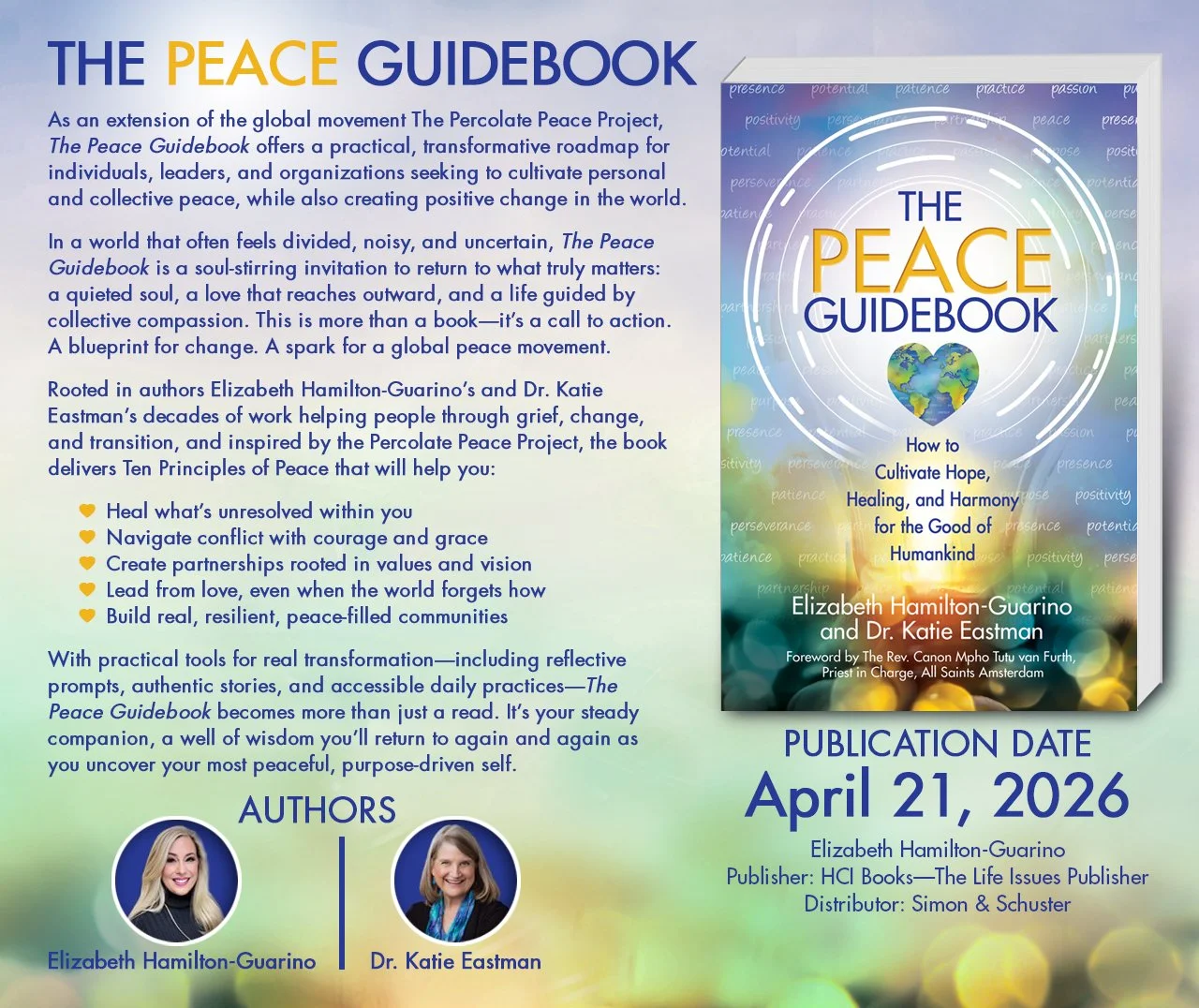
This understanding is what led Elizabeth Hamilton-Guarino and me to write The Peace Guidebook: How to Cultivate Hope, Healing, and Harmony for the Good of Humankind. We wanted to offer something that goes beyond theory. Something people could actually use in their real lives, in real conversations, and in real moments when things feel difficult.
The Ten Principles of Peace that we share in the book are rooted in psychology, lived experience, and the simple truth that when we learn to regulate ourselves, we change how we show up everywhere. Peace becomes the foundation for healthier relationships, clearer communication, and a deeper sense of belonging.
If there is one thing I hope people take from this work, it is this: peace is not distant or unreachable. It is already within us. We simply have to remember it, return to it, and allow it to guide our choices.I look forward to continuing this conversation here and exploring what it truly means to live with peace, presence, and emotional well-being in a complex world.